
Edge Erosion in Small-Cap Trading: Is the Late Day Fade Strategy Dead? (2021–2026 Backtest)
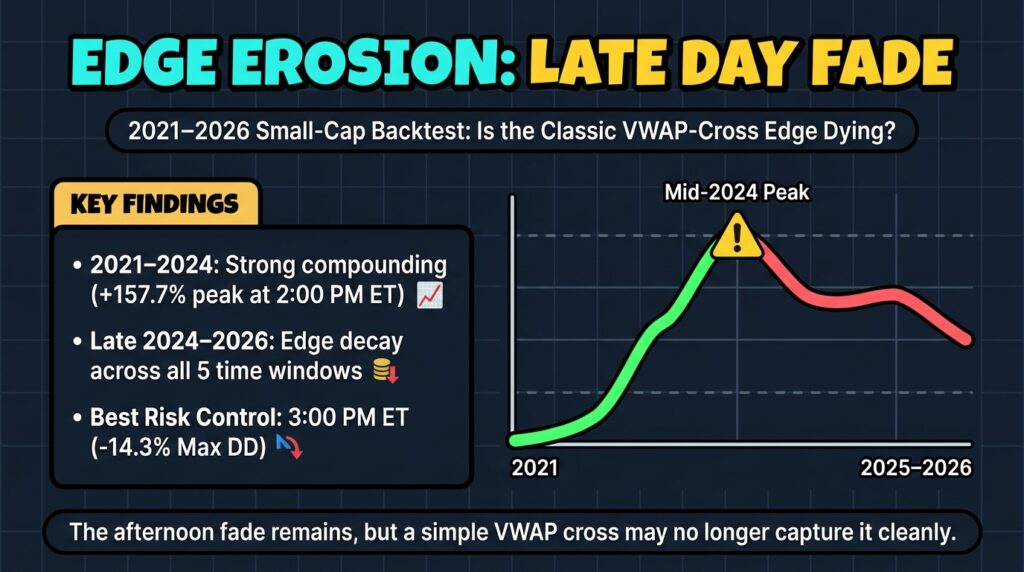
Is the Late Day Fade Strategy Losing Its Edge? (Quick Answer)
A 2021–2026 backtest across five afternoon entry windows (1:30 PM to 3:30 PM ET) using a bearish VWAP crossover trigger shows that while cumulative returns remain positive—peaking at +157.7% (Sharpe 1.01) for the 2:00 PM variant—edge erosion began in late 2024 across all tested windows. The 3:00 PM ET variant best withstood the drawdown (-14.3% Max DD), suggesting that the classic VWAP-cross trigger may no longer capture late-day weakness as cleanly as it once did.
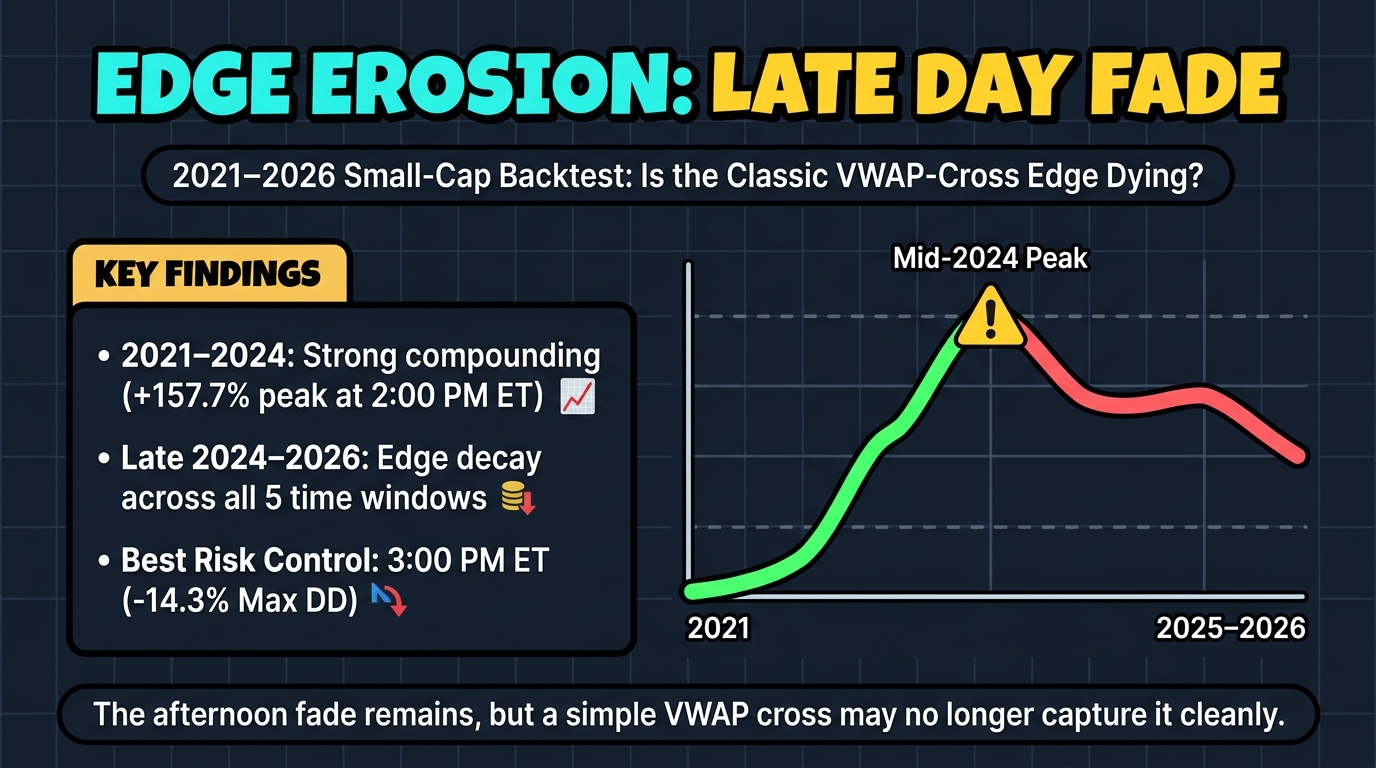
Trading edges aren’t forever. A quantitative strategy can compound steadily for years and then begin to decay when market microstructure, liquidity, or participant behavior shifts. In our Small-Cap Gappers RTH Big Picture study, we saw that afternoon fades into 14:00–15:00 ET are a core feature of small-cap gappers. In this article, we put the classic Late Day Fade setup under the microscope to see whether its mathematical edge is eroding.
1. Strategy Setup & Rules
Following the rule-based framework from our 6-Stage Systematic Trading Pipeline, we defined explicit, testable entry, stop-loss, and exit conditions:
- Pre-Condition (Extension): The stock is significantly extended relative to the previous day’s close (bullish gap) and relative to the current RTH session open.
- Intraday Strength: Sustained strength throughout most of the session—not just an isolated opening spike.
- Afternoon Weakness: Signs of exhaustion starting around 2:30 PM ET (loss of momentum, support breakdowns, or continuation failures).
- Entry Trigger: A downward crossover below VWAP, aiming to capture the start of the afternoon fade.
- Stop Loss: VWAP reclaim.
- Exit: Close the position at the end of Regular Trading Hours (4:00 PM ET).
2. Backtest Design: Shifting the Time Window
To test how this behavior has evolved from January 2021 through September 2026, we progressively shifted the time at which the strategy begins looking for a loss of strength: 1:30 PM, 2:00 PM, 2:30 PM, 3:00 PM, and 3:30 PM ET. In every variant, prior strength is measured before that cutoff, and from that point forward the system waits for a bearish VWAP cross as the short trigger.
3. Results: 2021–2026 Equity Curves
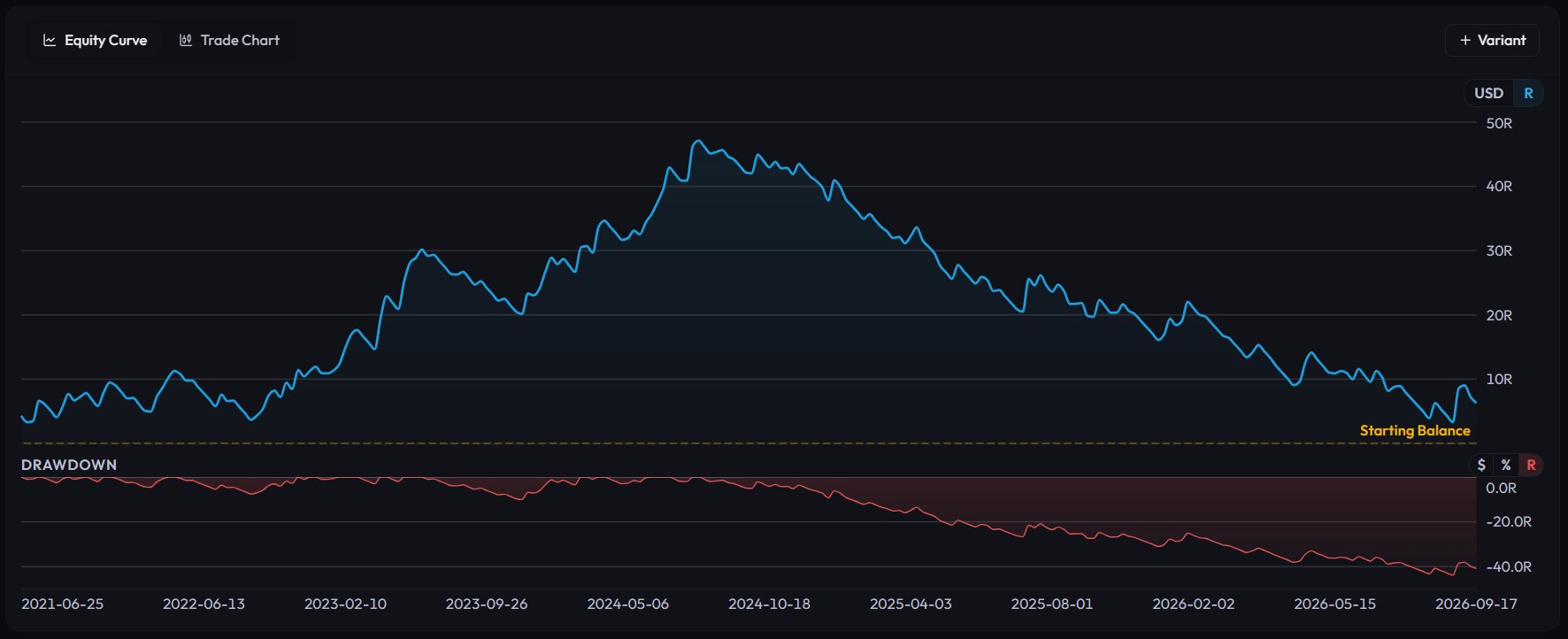
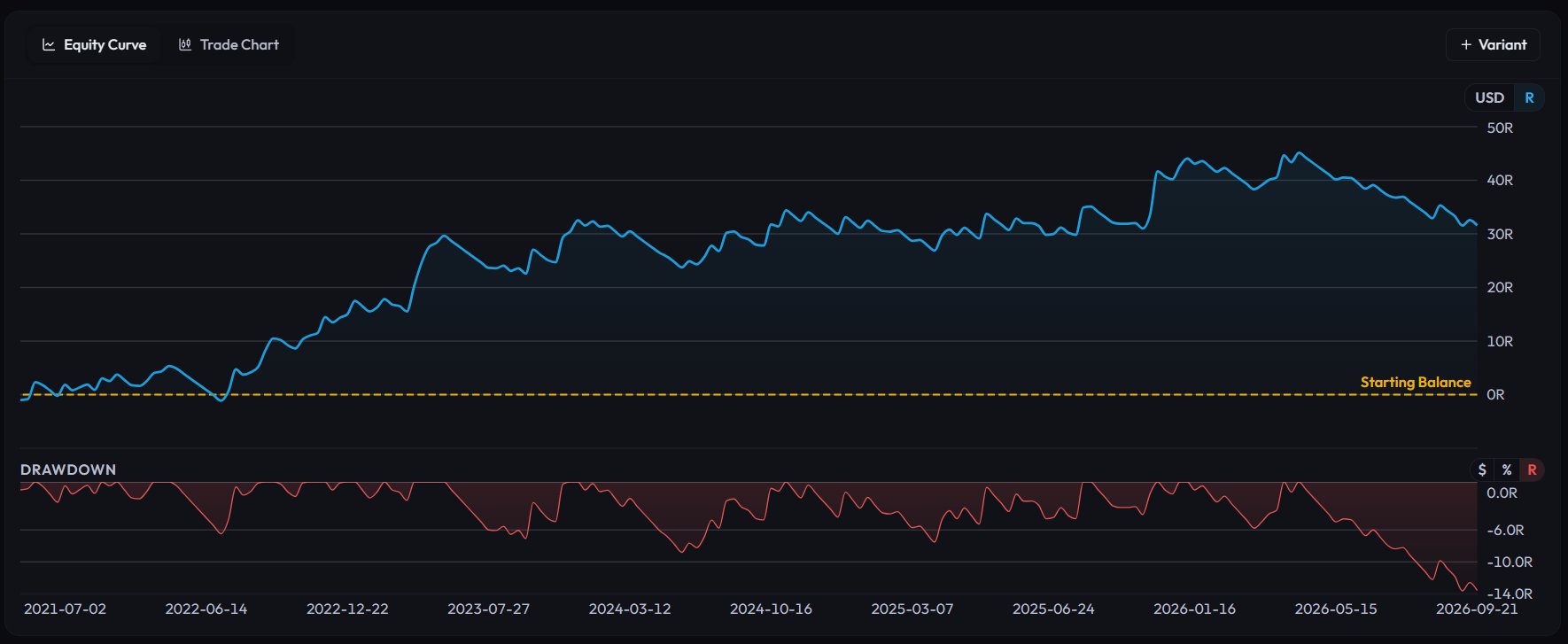
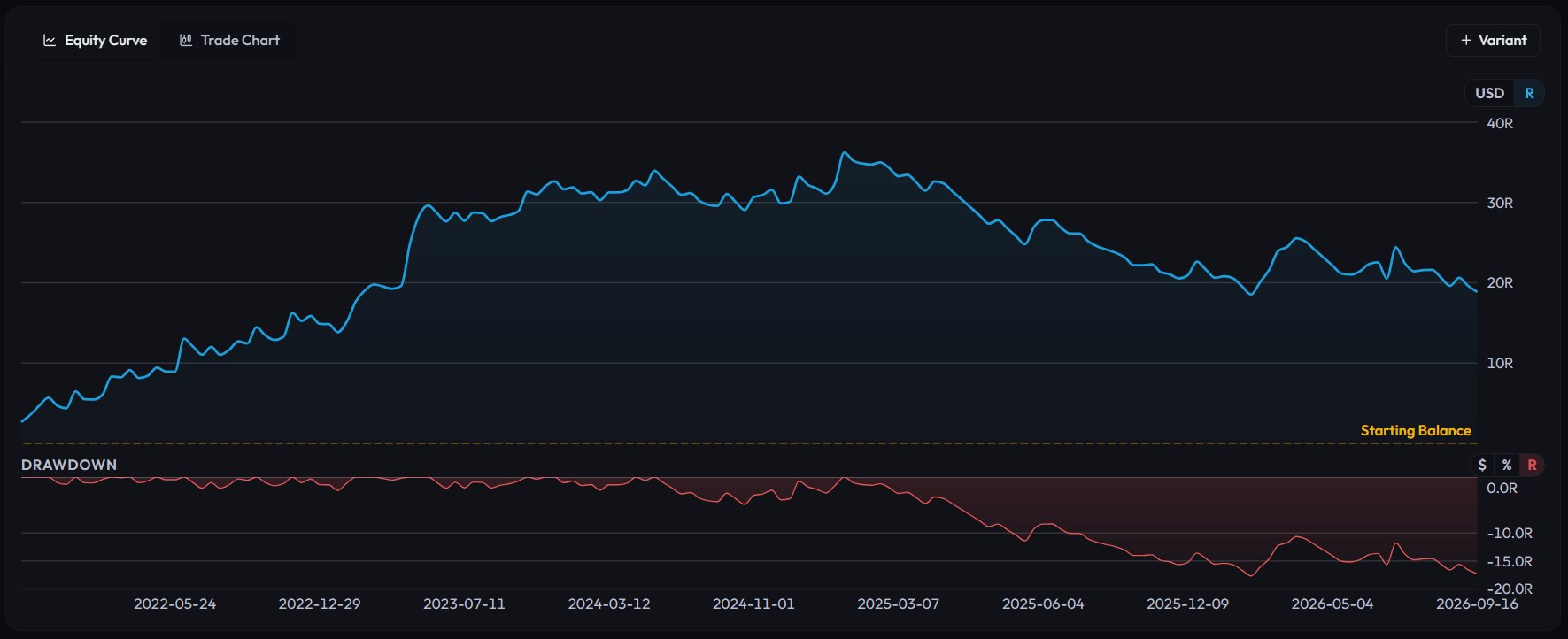
Despite differences across the five time windows, all equity curves share a striking structural pattern: steady compounding through mid-2024, followed by edge erosion starting in the second half of 2024 and spreading through 2025–2026. None of the variants manages to surpass its 2024 all-time highs.
LDF 1:30 PM ET (13:30)
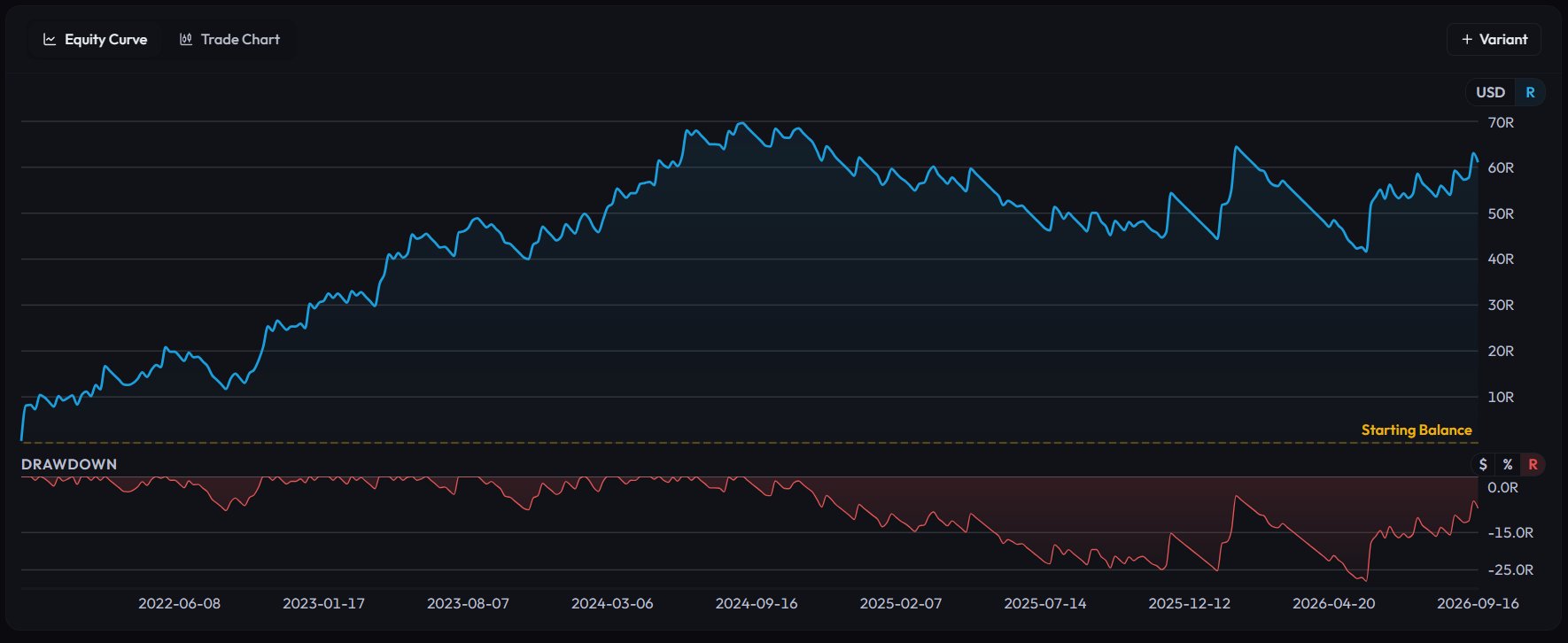
LDF 2:00 PM ET (14:00)
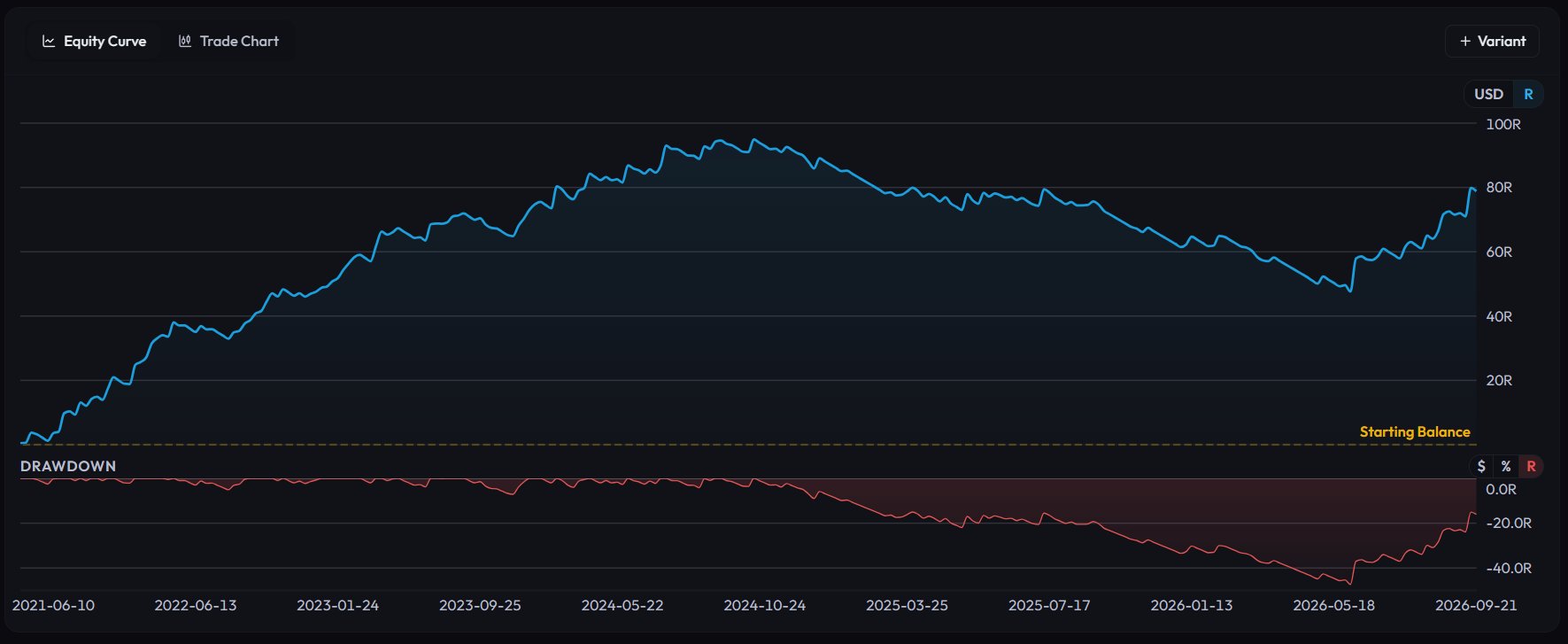
LDF 2:30 PM ET (14:30)
LDF 3:00 PM ET (15:00)
LDF 3:30 PM ET (15:30)
4. Performance Comparison Across All 5 Variants
5. Conclusion: Is the Setup Broken or Just the Trigger?
The Late Day Fade is clearly not performing as it did prior to mid-2024. Thanks to strong 2021–2024 gains, cumulative returns remain positive—led by LDF 2:00 PM (+157.7%)—while LDF 3:00 PM best controlled risk with a -14.3% Max DD and 4.23 Ulcer Index.
The key quantitative question now is whether the underlying Late Day Fade behavior has disappeared, or whether a simple bearish VWAP crossover no longer captures afternoon weakness cleanly. The next step is testing alternative weakness triggers—such as failed high-of-day retests, lower highs, or volume decay filters—to see if the edge persists under a sharper definition.
Test Edge Erosion & Alternative Triggers Yourself
Every equity curve and metric table in this study was generated in minutes on GapperLab. Test your own time-of-day cutoffs, VWAP rules, and small-cap short triggers across clean historical intraday data—without writing Python.
👉 Get started free on GapperLab and backtest your Late Day Fade rules
Frequently Asked Questions (FAQ)
What is edge erosion in systematic trading?
Edge erosion occurs when a trading strategy that previously generated positive expectancy loses effectiveness over time due to crowding, structural market changes, or shifts in participant behavior.
Which Late Day Fade time window performed best from 2021 to 2026?
The 2:00 PM ET (14:00) variant achieved the highest cumulative return (+157.7%, Sharpe 1.01, Profit Factor 1.48), while the 3:00 PM ET (15:00) variant delivered the lowest maximum drawdown (-14.3%) and best Ulcer Index (4.23).
For educational purposes only. Trading involves risk. Past performance does not guarantee future results.